
Tracing Former Rappahannock Owners
Build a former-owner timeline from the actual instruments. Do not rely on names from a map or a tax notice. Fill in each step from the deed itself. The template here is a research worksheet rather than a sample Rappahannock deed result. Start with the most recent grantee. Copy the grantor plus the recording reference. Then search that earlier party as a grantee. Confirm every link against the legal description before treating two parcels as the same tract.
| Transfer date | Grantor to Grantee | Deed type | Book/page or instrument |
|---|---|---|---|
| Enter from the deed | Transcribe each party and capacity | Copy the instrument title | Record exact book/page or number |
| Enter from the prior deed | Search the prior grantor as grantee | Check whether it conveyed the same tract | Preserve its source reference |
| Enter from the paper book | Repeat the party chain before 1987 | Read the full legal description | Note reel and volume details |
A recent transfer starts in Virginia SRA. An older transfer calls for the Library of Virginia catalog, where you can identify the deed book and then ask the Clerk or the library about access. For a tract predating county formation, follow the source deed into Culpeper County records. The online cutoff simply marks a change of method. It does not mark the beginning of ownership.
Rappahannock's Online Chain Ends in 1987
Rappahannock's free land index is the Virginia Circuit Court SRA. It starts on January 5, 1987. It runs to the present. It is a party and recording index rather than a full image archive. Remote images sit behind the Clerk's paid subscriber agreement. While tracing former owners, save each result reference. Keep moving party by party until the chain passes beyond the online period. The Clerk cannot pull a deed copy from a street address alone. Identifying the record takes a grantee or grantor name. A date range, an instrument number, or a book and page will also work. A chain that seems to stop at 1987 has simply reached the handoff point. That point leads to paper indexes, deed books, and microfilm. It is not proof the parcel had no earlier owner. The Circuit Clerk's page confirms the local cutoff and the copy identifiers to cite.
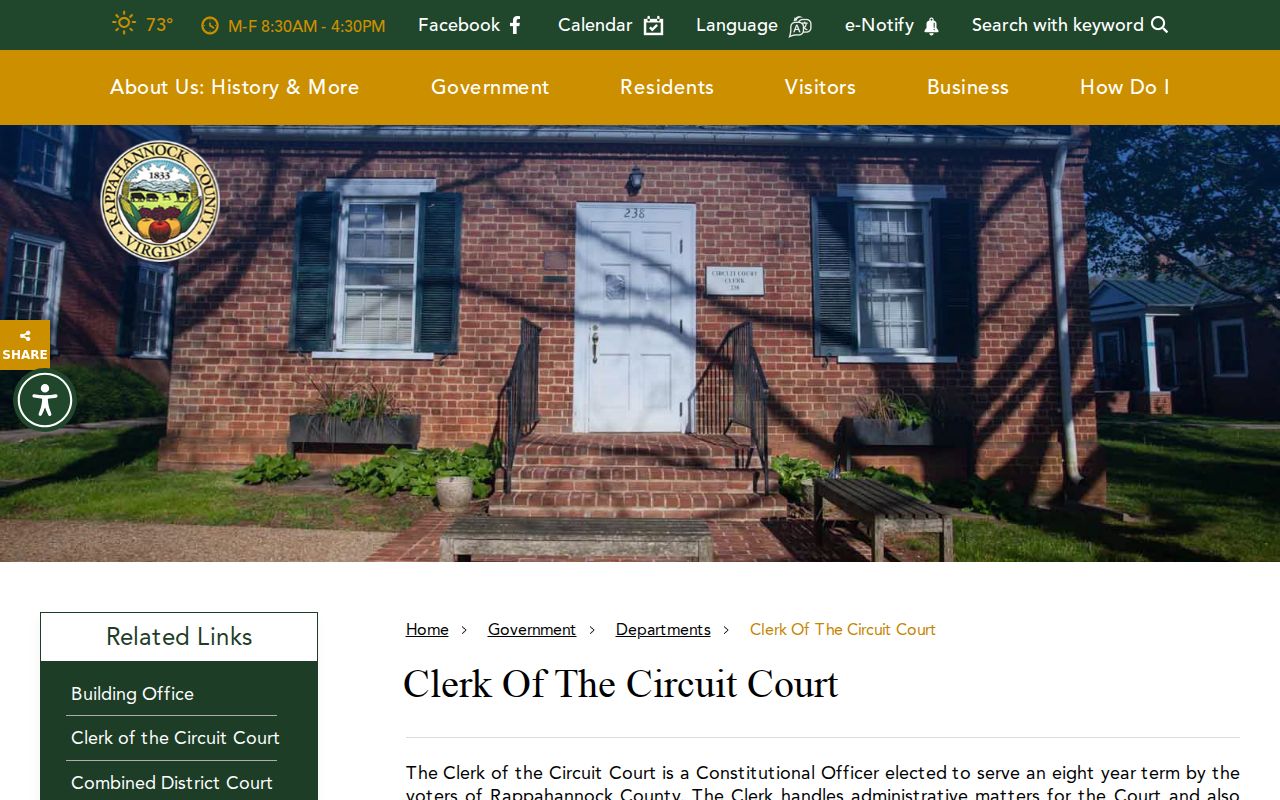
For one instrument's copy fee and access options, see the Rappahannock County deed-records instructions.
Rappahannock Deed Books at the LVA
The Library of Virginia's catalog opens with Deed Book A, covering 1833 to 1834. It continues through books B to L plus later L/M material into 1871. Its finding aid lists reel numbers and date ranges. Many entries are marked for interlibrary loan. These are archival references, not a live online deed-image portal. Ask the local library or LVA about current reel access before a visit or request. Rappahannock deed books are indexed by party. That means an old road name or a modern situs may not surface a transaction. Bring the prior grantee's name, an approximate year. Bring details like the subdivision or farm name, the acreage, the adjoining tract, and any source book and page. When a deed cites an earlier volume, follow that citation rather than chasing a modern mailing label. The LVA Rappahannock microfilm catalog identifies the books and court series.
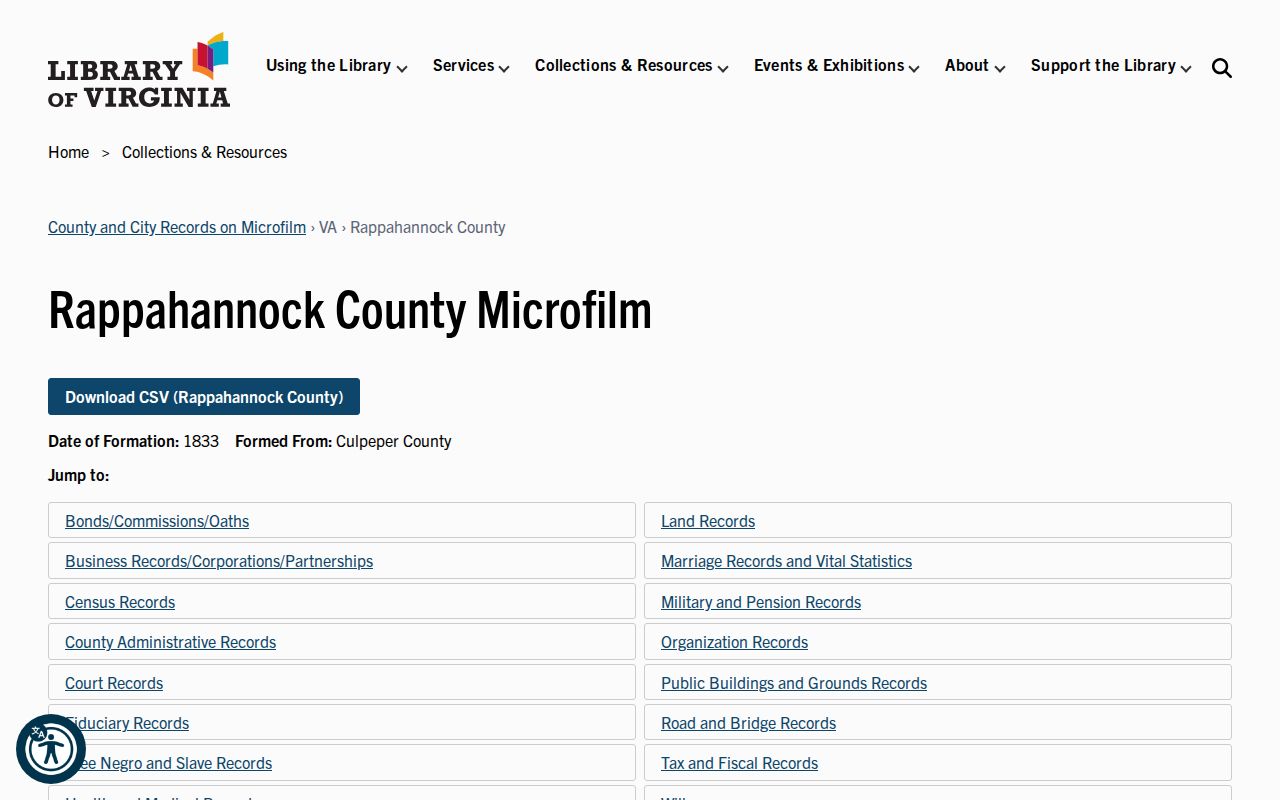
The earlier deeds and their legal descriptions carry the chain past the digital index.
Walk the Rappahannock Deed Chain Back
Work through the party index transfer by transfer. A grantor conveys an interest; a grantee receives it. The chain of title is the ordered set of recorded events for the parcel, and it can hold far more than warranty deeds. Search entity and fiduciary names exactly as they appear. Where a parcel was divided or renamed, compare the legal description across every instrument before linking them.
- Find the latest deed and write down its grantee, grantor, recording date, and legal description.
- Search the grantor as a grantee to locate that party's acquisition deed.
- Compare the acreage, roads, adjoining owners, TM# references, and every “less and except” clause.
- At the online limit, move to the Clerk's paper books or the matching LVA reel.
- Grantor / grantee
- The transferor or transferee named in a deed.
- Chain of title
- The ordered sequence of earlier recorded deeds.
- Legal description
- The deed's written land description, which may identify older tracts better than a street address.
Estates Can Break a Rappahannock Name Chain
An owner's death often shifts the paper trail. The next land record may not name a familiar grantee. It may name an executor, administrator, heir, trustee, or estate instead. Rappahannock's Circuit Court Clerk holds probate, wills, estate administration, and land records together. Request the probate case, the qualification, the will, and the inventory. Also ask for any order authorizing a sale. Ask for the executor deed or distribution order too. Then search the land records for the fiduciary and the grantee who followed. Chancery books can explain a partition or a dispute the deed index never reveals. The LVA catalog lists Rappahannock chancery material from the nineteenth century. A death certificate may supply context under Virginia access rules. But it is not a deed. It proves nothing about who received the property. Keep each court order paired with its conveyance as separate links in the ownership chain. The Rappahannock Circuit Court page identifies the local Clerk's office.
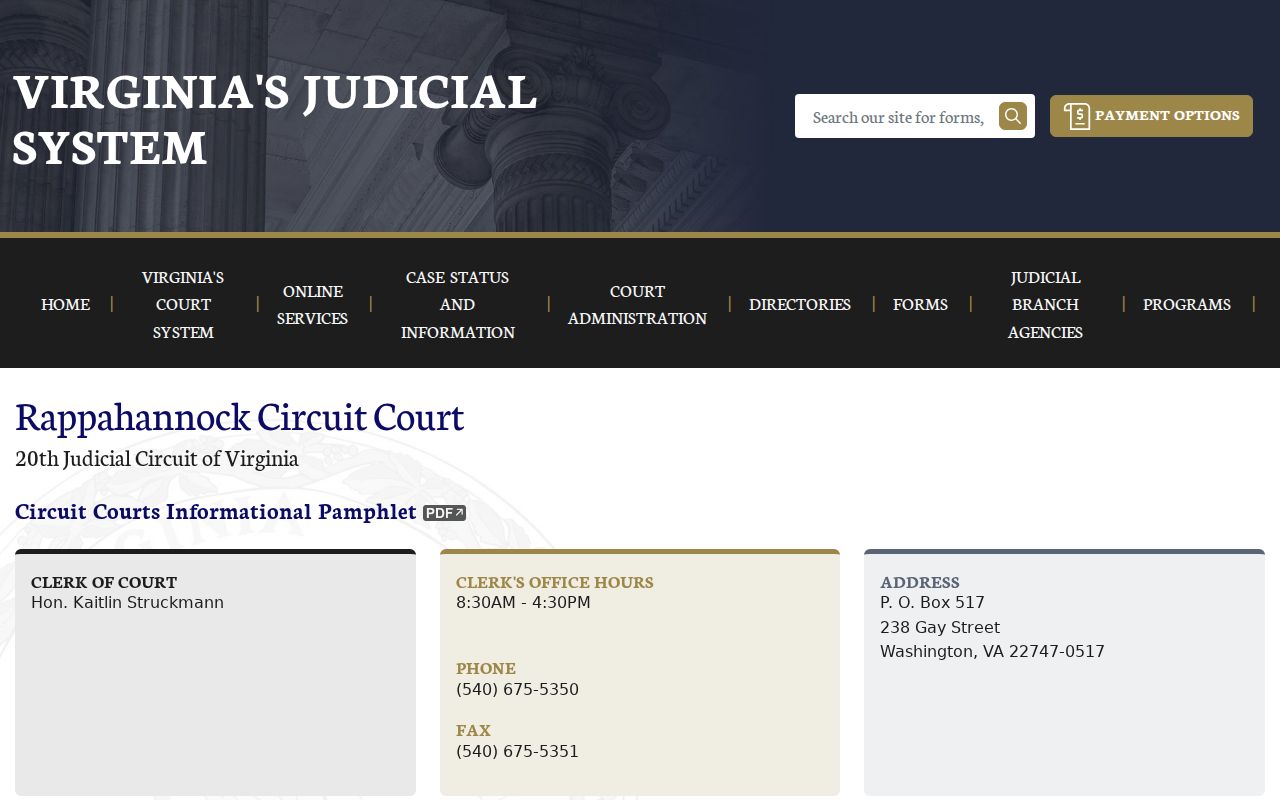
Follow the record event that moved title, not just the event that explains why it moved.
Rappahannock Owners on the 1866 Map
The Library of Congress holds an 1866 cadastral map. It names Rappahannock landowners within the county's historic geography. For house-history work, it can suggest a surname or a tract location. This helps when modern parcel labels stop short. It remains a snapshot, though, not a title instrument or a surveyed boundary.
Test any map name against the deed books and chancery records. Rappahannock was formed from Culpeper in 1833, so older tracts may require predecessor-county records. A map name can be misspelled or abbreviated. It may also be tied to a farm larger than today's parcel. Treat it as a lead, then verify every transfer in the deed chain. The Library of Congress entry describes the historic map and its landownership content.
How Far Back Rappahannock Records Reach
Rappahannock County was carved out of Culpeper County in 1833. Its earliest deed book, Book A, covers 1833 to 1834. That book appears in the Library of Virginia catalog. A parcel with older roots may trace back into Culpeper records instead. That means a pre-1833 chain simply shifts to a different county's deed books. It does not disappear. The online SRA index is far younger. It starts on January 5, 1987. That leaves a long stretch. Only the Clerk's books and LVA microfilm can cover it. Never assume an older deed was digitized. The LVA catalog also holds Rappahannock chancery books from 1852 through 1895. Those cases settle partitions, estate transfers, boundary fights, and sales. That helps when a deed chain skips a link. Rappahannock property records show no courthouse-fire loss. So a gap in the online trail usually means the material sits offline, not that it burned.
Online limit. The free Rappahannock SRA land index begins January 5, 1987. Earlier deed books and court material require a Clerk or Library of Virginia request.
Tax-Sale Notices Preserve Deed Clues
A 2025 Rappahannock special commissioner notice is a tax-sale advertisement. It shows how much these ads can reveal about former owners. Each entry lists a TM#, the assessed party, and a legal description. It also names the source deed book and page. Some cite Blue Ridge Mountain Estates, Route 600, and Rush River tracts. Others mention multiple heirs and "less and except" language. A modern street name may never appear in the deed itself. That detail can still pin down the right volume. Old notices are a deed-record research tool in their own right. The advertised auction was held on July 17, 2025. Treat it as a past example rather than a live sale list. The notice made the sale subject to court confirmation. It also urged bidders to order an independent title search. None of that guarantees a transfer finished. Before adding an auction buyer to an ownership timeline, pull the court order. Then pull the confirmation and the later recorded deed. A notice starts the trail; the deed records close it.